
Ride the Akihabara Street Kart Route Again in a New Season: What You Notice the Second Time Around
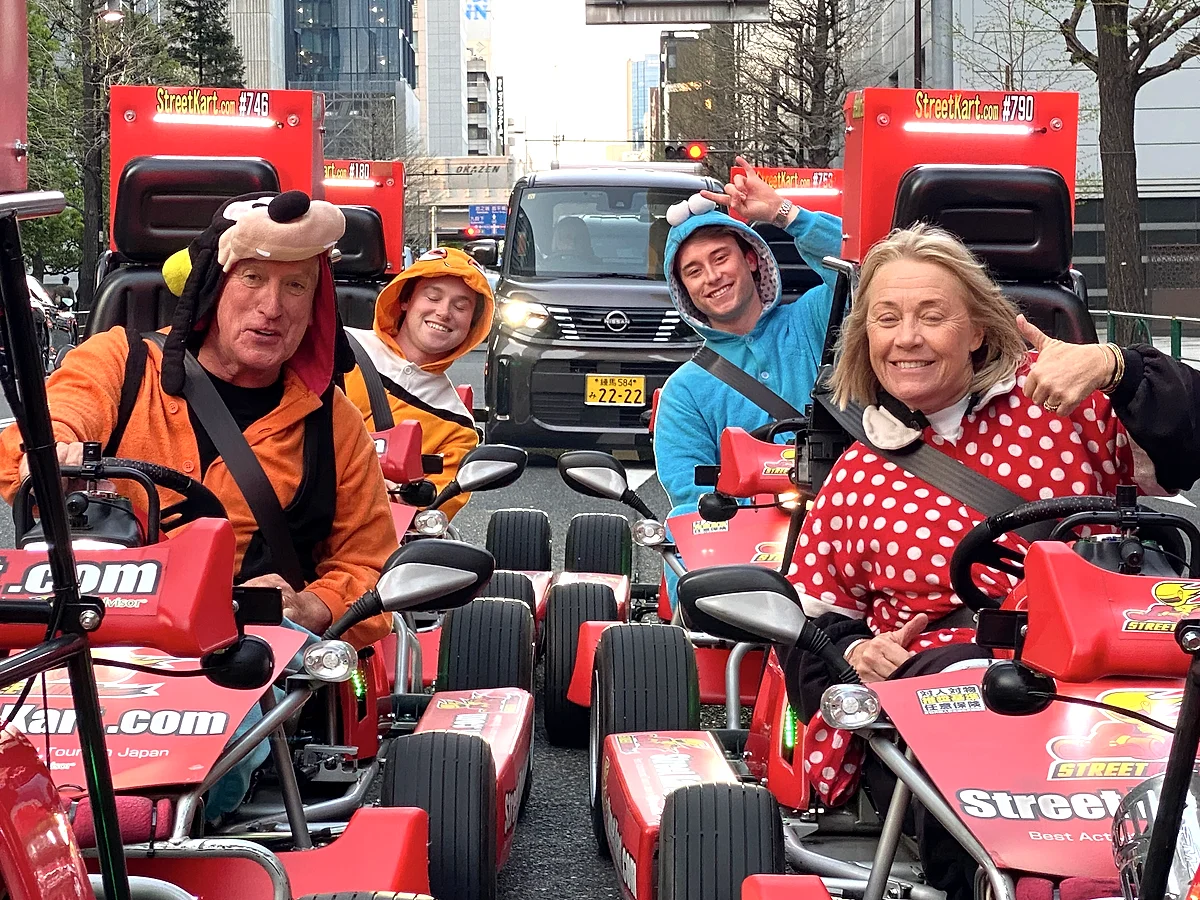
Ride the Akihabara Street Kart Route Again in a New Season: What You Notice the Second Time Around
Do you remember your first street kart ride? The feel of the steering wheel. Your guide's back up ahead. The odd closeness of looking up at the car beside you when you stopped at a light.
You probably don't remember much of the scenery, and that's fine. Most first rides go that way.
So why not drive the Akihabara route again, this time in a different season? The roads are the same, but the sky is a different color. The wind is a different temperature. The people on the sidewalks are dressed differently. If you're traveling as a pair, the person you can turn to and say "Remember what it was like last time?" is in the very next kart.
This article is for people who have already been on a street kart tour once. It's about how to enjoy Akihabara the second time.
Why does Akihabara look different the second time?
Think back to what filled your head on your first tour. How hard to press the accelerator. When to brake. How far to stay behind the kart in front. The guide's instructions. All of it was new, and you were probably fully occupied with what was right in front of you.
The second time, you have a little more room. Your body remembers how to drive. So when you happen to look up, you notice the signs on top of the buildings and the buildings across the intersection. I think the real fun of a second ride lies in those unplanned glances.
On a street kart you sit low, and there's almost nothing between you and the city. Sound, wind, and sunlight hit you directly. The first time, you may have taken all of that in as raw sensation. The second time is a chance to sort through it piece by piece. Is the wind cold today, or humid? Is the city louder or quieter than before? Because it's the same road, the differences stand out clearly.
That said, even on your second ride, listen to the pre-departure safety briefing as if it were your first. Kart controls, the day's route, the precautions. It may sound like the same talk as last time, but a different course or season can change what you need to watch for. While you listen, trace the route in your head and think about where you might be able to look up and take in the view. Doing just that will leave you much more relaxed once you're on the road.
A quick review. The landmarks listed for the Akihabara store's tours are Chuo-dori in Akihabara Electric Town, the red-brick Marunouchi Station Building of Tokyo Station, and Ginza. Electric Town is lined with electronics stores and anime shops, and around Yodobashi Camera and Akihabara UDX, the signs stack up layer upon layer. Tokyo Station's Marunouchi building opened in 1914 (Taisho 3) and is an Important Cultural Property whose restoration was completed in 2012. In Ginza, there's the Wako clock tower at the 4-chome intersection, and the streets are lined with the Kabukiza Theatre, Ginza Mitsukoshi, and Matsuya Ginza.
Akihabara has two stores, Store 1 and Store 2, located almost next to each other. Every tour is led by a guide. The area covered depends on the course, so check the official website before booking to see which roads you'll take. You won't necessarily drive exactly the same route as last time. Even so, the run from Akihabara to Tokyo Station and on to Ginza is worth comparing across seasons.
How does Akihabara's scenery change with the seasons?
I've lived in Japan for five years, and I'm still surprised by how distinct Tokyo's seasons are. Some days, the same intersection looks like a different place in spring than in winter.
If you're driving Akihabara in a different season from your first ride, where should you look? Here's a season-by-season guide.
In spring and early summer, the air in Akihabara feels soft
Spring sunlight in Tokyo is gentle, yet some days the wind still carries a chill. It's warm in the sun, but once you start moving, the breeze feels cool. On a kart you feel that contrast directly on your skin. If your first ride was in winter, you may be a little surprised to find that the same Chuo-dori could be this bright.
The red brick of the Marunouchi Station Building looks sharper the bluer the sky is. If your first ride was at night or on a cloudy day, you'll probably notice the fine patterns in the brick and the rows of windows. On the streets of Ginza, people are dressed more lightly, and the colors in the shop windows have changed.
In May, the Kanda Festival takes place at Kanda Myojin Shrine, about a 10-minute walk from the Akihabara store. Known as the guardian shrine of old Edo, it has a history of 1,300 years. It isn't a stop on the tour, but it's within walking distance. If you're in Akihabara around festival time, consider taking a short detour before or after your kart ride. You'll see another side of Akihabara. The dates change from year to year, so it's a good idea to check ahead.
In midsummer, you feel the heat rising off the road
Honestly, Tokyo in midsummer is very hot. Some years the heat doesn't let up even in September. Because you sit so low, the heat from the sun-baked asphalt is close by. If your first ride was in spring or fall, the same road will feel very different.
On the other hand, summer gives the scenery sharper outlines. Under strong sunlight, the signs in Electric Town take on deeper colors, and the buildings cast dark shadows. The red brick and the blue sky stand in crisp contrast. You stop at a light and slide into the shade of a building, and for a moment it's just a little cooler. Noticing small temperature shifts like that may be something only the extra headspace of a second ride allows.
If you're driving in summer, drink plenty of water before the tour. There are convenience stores and cafés within walking distance of the store. The Starbucks in front of Akihabara Station is about a two-minute walk away, a good distance for the two of you to catch your breath before setting off. Check the dress code on the official website in advance.
Pay attention to your footwear, too. Sandals are tempting on a hot day, but open-toed shoes are not recommended. Closed-toe shoes such as sneakers are a better fit. It's also a good idea to apply sunscreen before you head out. On a kart your body stays exposed to the sun, so places you wouldn't think about while walking, like the back of your neck and the backs of your hands, get more sun than you'd expect.
In fall and winter, you drive through a city that gets dark early
From fall into winter, the sun sets early. Even if you book the same time as in summer, it will often still be light in summer and already dark in winter. Tour times vary by store and by day, so confirm when you book.
Once Akihabara gets dark, the illuminated signs take center stage. What were just letters during the day now glow along both sides of the street. In Ginza, the Wako clock tower stands against the night sky, and the light from the shop windows reflects off the pavement. If your first ride was during the day, the same intersections will look like places you've never seen. The Marunouchi Station Building, too, looks completely different at night than during the day.
Fall is the season when sunset comes a little earlier each day. If you ride in the late afternoon, you may be able to watch the sky gradually change color. The street that was still bright when you set off is, before you know it, starting to glow under the signs. If you've only seen the city in daylight or only at night on your first ride, choosing that in-between hour is a way to enjoy something only a second ride can offer.
Be aware, though, that the winter wind is cold. Because your body stays exposed to the open air as you drive, it feels much colder than walking. To find out how much in the way of gloves or scarves you can wear while driving, check the official website in advance or ask the staff on the day.
At a red light, a puff of white breath rises from the kart beside you, and you can't help laughing. That's part of the winter scenery in Akihabara too.
A word about rain. On rainy days, raincoats are provided free of charge. The official website explains how tours are handled depending on the weather, so if you're booking during a rainy season, give it a read beforehand.
Take photos together after you get out of the kart
Will there be chances to take photos? If you have only a few days in Tokyo, that's probably something you're wondering about.
First, the important part: do not touch your smartphone while driving. Keep both hands on the wheel while driving, and pay attention to the guide in front and the traffic around you. Take in the scenery with your eyes and remember it with your body. Save the photos for after you get out. Personally, I think drawing that line is the single best way to make your second ride a good one.
So where should you take pictures? I recommend walking back to the same sights before or after the tour. From the Akihabara store to Tokyo Station is about a 20-minute walk, or about 5 minutes by train. The front of the station on the Marunouchi side is a well-known spot for photographing the red-brick building.
Now look up from the front, on foot, at the building you just drove past in the kart. It's the same building, but its size feels different. It doesn't quite match your memory from that low vantage point. That slight mismatch can make for a surprisingly good photo.
If you're traveling as a pair, it's a nice idea to bring the photos from your first trip. Stand in the same spot and take another shot with the same composition. In a different season, the color of the sky, the clothes of passersby, and the angle of the light will all be different. Just putting the two photos side by side makes a travel record. In Akihabara, the cluster of signs along Chuo-dori is listed as a photo spot. The signs look entirely different by day and by night, so shooting at a different time of day than last time could be interesting too.
Also, take one photo of the two of you near the store before you set off. The slightly tense face before departure and the face after the ride: that difference shows up clearly, no matter how many times you've done it.
Whether you can receive photo data after the tour varies by service. Even if you got photos last time, it may not be the same this time. If you check when you book, it's easier to decide in advance which photos to focus on taking yourselves.
Rediscovering Street Kart's appeal from a second-time perspective
The first time, you were probably absorbed in the experience itself. The second time, try stepping back a little and looking at how the tour works. That alone will show you something new.
On the day of the tour, guidance is basically in English. Guidance in Japanese or other languages depends on the staff that day and isn't guaranteed. The website is available in 22 languages. If you have any concerns, contacting them in advance will make the day go more smoothly.
After driving the same Akihabara roads twice in different seasons, you might choose a route from a different store for your third ride. That's another way to keep it going. For details on which routes are available at which stores, please check the official website (kart.st).
Before booking your next-season ride in Akihabara: what to check
Being a second-timer doesn't mean you can skip preparation, especially if some time has passed since your first ride.
The most important thing is your driver's license. Just because you could join last time doesn't mean you can join this time with the same license. For example, International Driving Permits have expiration dates, and different types of licenses are handled differently. Check the driver's license information page for the required license types and what to bring, and confirm that your license allows you to drive.
Review your luggage too, rather than relying on your memory of last time. Only a small bag or so can go in the kart. The store has lockers for small items, but they aren't suitable for large luggage like suitcases. If you're stopping by Akihabara in the middle of your trip, drop your large bags off at your hotel first so you can set off without being weighed down.
Bookings are accepted via Facebook, LINE, and email (booking@streetkart.com). Please check the official website for detailed instructions. Weekends fill up quickly, so if you want to drive Akihabara on a weekend, book early. If your itinerary includes weekdays, consider those as well.
Check the weather and cancellation policies before booking, too. Tours go ahead as planned in light to moderate rain. For how heavy rain and typhoons are handled, please check the official website. Cancellations are free up to 7 days in advance.
Tour duration and departure times vary by store and plan. If you want to combine the tour with a visit to Kanda Myojin or time to walk over and see the Marunouchi Station Building, the surest approach is to confirm the tour details when booking and then plan your day around them. Ueno Park is also about 5 minutes away by train. Depending on the season, it might be worth a visit before or after the tour.
Even on the same Akihabara roads, a change of season changes what you see and what you feel on your skin.
What you missed the first time is probably waiting for you on the road the second time.
Once your plans for next season start to take shape, check the stores and tours on the official website and decide together which season you'll ride.
This article was originally written in Japanese and translated using AI. Some expressions may read unnaturally, and we appreciate your understanding. For the most accurate and up-to-date information, please refer to the official site at kart.st.
Street Kart is not affiliated with Nintendo or the Mario Kart series in any way. We do not provide costumes of Nintendo characters, and such costumes may not be worn during tours even if brought by participants.